

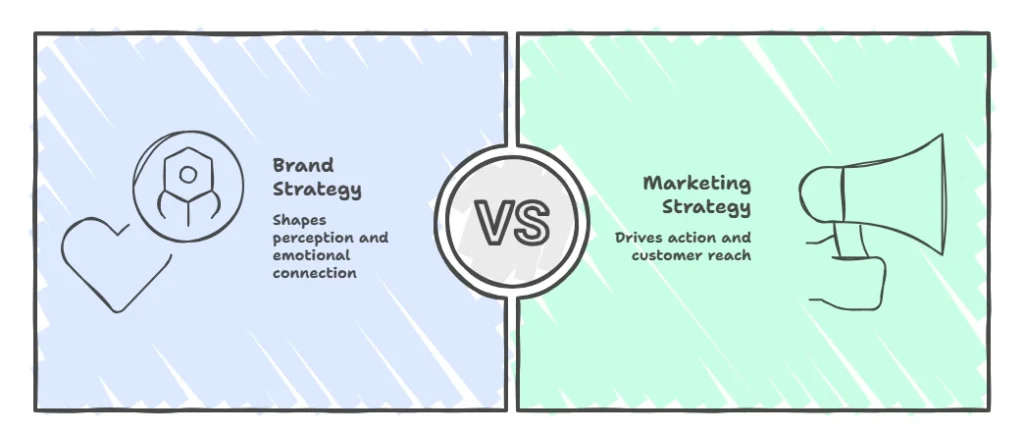
Marketing strategy and brand strategy work together, but they are not the same. The simplest difference is that brand strategy defines who you are, while marketing strategy explains how you promote what you offer. Brand strategy shapes perception. Marketing strategy drives action.
A brand strategy focuses on identity, values, personality, promise, and the emotional connection you build with your audience. It influences how people feel about your business even before they buy. A marketing strategy focuses on campaigns, channels, messaging, budgets and tactics that help you reach customers and encourage them to take action. Both are important, but they serve different purposes.
What Is Brand Strategy?
Brand strategy is the long-term plan that guides how your business looks, sounds and behaves. It defines your purpose, what you stand for, the problems you aim to solve and the way you want customers to perceive you. A strong brand strategy gives your company a clear voice and character. It shapes your identity across visual elements, tone of voice, customer experience and communication.
Brand strategy also works internally. It unites teams, helps them make consistent decisions and ensures that every interaction reflects the same personality. When your brand feels reliable and recognisable, people trust it more. That trust builds loyalty, and loyalty builds long-term business strength.
What Is Marketing Strategy?
Marketing strategy is the practical plan that helps you promote your products or services. It includes the channels you use, the audiences you target, the goals you set and the tactics that support your campaigns. Marketing strategy is active and measurable. It focuses on generating leads, increasing sales and reaching more people.
A marketing strategy can change frequently depending on data, competition or demand. It can include SEO, social media, ads, email campaigns, events and more. While brand strategy answers who you are, marketing strategy answers how you communicate and persuade.
How the Two Work Together
Brand strategy provides the foundation. It shapes the tone of your campaigns, the visuals you use and the promise you communicate. Without a clear brand strategy, marketing efforts feel inconsistent, disconnected or forgettable.
Marketing strategy brings brand strategy to life. It amplifies your message, reaches new audiences and gets people to take action. When both are aligned, your business becomes easier for customers to recognise and trust.
If brand strategy is your long-term identity, marketing strategy is the engine that keeps your growth moving.
Why Businesses Need Both
Many companies invest in marketing without building a brand strategy first. This often leads to wasted budget, confusing messages and campaigns that fail to connect emotionally.
On the other hand, a brand strategy without a marketing plan remains unseen. You may have a strong identity, but no one discovers it.
You need both to build awareness, inspire trust and create sales momentum. Brand strategy builds meaning. Marketing strategy builds reach. Together, they form a complete growth framework.
Key Differences at a Glance
Purpose
Brand strategy aims to build perception and trust. Marketing strategy aims to generate leads and drive conversions.
Timeframe
Brand strategy is long-term and stable. Marketing strategy can shift based on performance or trends.
Focus
Brand strategy centres on identity and experience. Marketing strategy centres on promotion and measurement.
Measurement
Brand strategy success is measured through recognition, loyalty and perception. Marketing strategy success is measured through clicks, conversions and sales.
Aligning Your Strategies for Global Growth
A global audience requires clarity and consistency. A clear brand strategy ensures your message feels unified across cultures and regions. It helps customers worldwide recognise your purpose instantly.
Your marketing strategy can then adapt to different local markets while staying within the boundaries of your brand. This balance keeps your voice recognisable while allowing flexibility in how you communicate.
If you want guidance on refining your brand identity or strengthening your marketing roadmap, the team at Exact Funnel can support you with practical steps and clear direction.
Common Mistakes Businesses Make
1. Treating brand strategy like a logo exercise
A brand strategy goes far beyond design. It shapes the heart of your identity and customer experience.
2. Launching campaigns without a clear message
Marketing becomes expensive when your positioning is unclear. Customers need to understand what makes you different.
3. Changing brand personality too often
Consistency builds trust. While marketing tactics can change, your brand personality should stay steady.
4. Splitting brand and marketing teams
When teams work in silos, communication becomes inconsistent. The two must collaborate closely.
5. Copying competitors
Your brand strategy should reflect your own values and strengths. Imitation weakens authenticity.
How to Decide What to Prioritise First
If your business lacks clarity around identity, personality or purpose, start with brand strategy. You must understand who you are before promoting yourself.
If your brand is clear but you struggle to reach customers or generate leads, focus on your marketing strategy. Campaigns, content and channel planning will help expand your visibility.
Many businesses benefit from addressing both together. Exact Funnel can help you evaluate your current strengths and find the right sequence for your goals.
Ready to strengthen your brand and accelerate your marketing results? Contact Exact Funnel today to build a strategy that drives global recognition and real business growth.

FAQs
What is the main difference between marketing strategy and brand strategy?
Brand strategy defines who you are and what you stand for. Marketing strategy defines how you promote your products or services.
Can a business succeed with only one of them?
It is possible, but not ideal. Brand strategy builds trust while marketing strategy drives sales. You need both for long-term success.
Should I create a brand strategy before a marketing strategy?
Yes. A clear brand foundation helps you build messaging that feels consistent and convincing.
How often should I update my strategies?
Brand strategy remains stable for years unless there is a major shift in your business. Marketing strategy can be updated frequently based on performance and new opportunities.
Why does consistency matter in brand and marketing efforts?
Consistency helps customers recognise and trust your business, no matter where they encounter it.